Bi Design House
Cash or Credit Card in Bali?
Cash or Credit Card in Bali?
When you think of Bali, your mind probably drifts to golden rice fields, breezy beach bars, and design-led stays where every corner is worthy of a photograph. There’s no doubt that the island is undeniably a feast for the senses, there’s also a practical side to visiting paradise: how do you actually pay for it all? Should you bring a wallet full of Rupiah, or use your credit card? This is one of the most common Bali travel money tips we get asked at Bi Design House.
Bali runs on the Indonesian Rupiah (IDR). If it’s your first time here, get ready for some big numbers! A coffee might cost IDR 50,000. Don’t panic—those numbers usually translate into a very reasonable amount in AUD, USD or EUR. Once you’ve wrapped your head around the currency, the next question is how best to carry it: cash or credit card in Bali?
Cash is still king in many corners of Bali, particularly in local shops. Wander through a local market, order nasi campur at a simple warung, or buy petrol at a roadside stand and cash will probably be the only way to pay.
Bali has a growing number of spaces — boutique hotels, chic cafés, interior design shops — where credit cards are happily accepted, particularly in the more touristy areas. Visa and Mastercard are the most widely accepted. At Bi Design House, for example, we welcome international cards for room bookings, dining, and in-house creative experiences, so you can settle in without thinking twice about cash.
But don’t rely on cards alone. Machines can be temperamental, electricity cuts can happen, and many venues still add a surcharge for card payments. In more rural or off-the-beaten-track areas, card readers may be absent altogether. And let’s not even think about what happens if a machine eats your card and you have no access to funds!
Carrying cash doesn’t have to feel risky. Most hotels (including ours) provide safes for your valuables, and ATMs are readily available across many areas, including Canggu, Uluwatu, and Ubud. There have been incidents of card skimming at ATMs, so try to use machines that are inside (or monitored by) actual banks, not just a random kiosk on the side of the road. Even better is to load up a travel debit card to fund your adventures, and keep your main credit card for emergencies only.
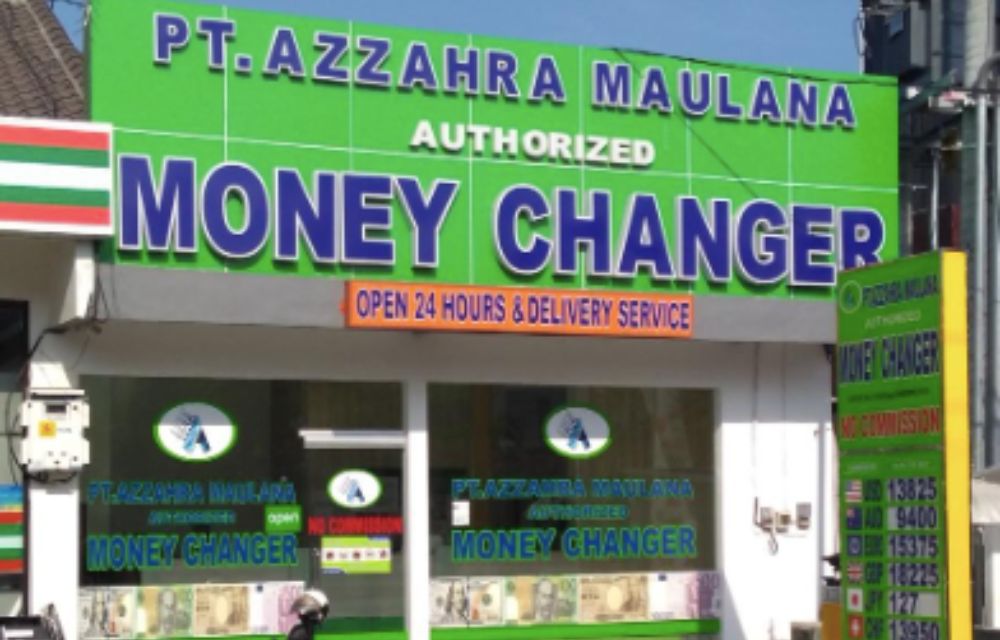
If you’re thinking of exchanging foreign currency, Bali has plenty of money changers — some more reputable than others. Stick to official exchanges with transparent boards and avoid tiny roadside kiosks offering suspiciously good rates. If it looks too good to be true, it is!
So, what’s the best approach? A balance! Use your debit/credit card for bigger transactions—hotels, fine dining, boutique shopping — and keep cash for everyday life. A good rule of thumb is to carry enough Rupiah for one to two days’ spending. That way, you’ll be ready for both a spontaneous street snack and a night of cocktails at a design-forward rooftop bar.
In the end, Bali is an island of contrasts — ancient temples and modern co-working hubs, lush rice fields next to sleek cafes. Your approach to money should mirror that same balance. Bring both cash and cards, mix practicality with ease, and let the details fade into the background. After all, the best Bali travel advice is simple: focus less on logistics, and more on soaking up the art, design, and culture that make the island unforgettable. At Bi Design House, we take care of the details so you can immerse yourself fully on what matters most: inspiration, creativity, and connection.